In this guide
Fast answer
The short answer
A plunger may help a soft blockage confined to one fixture. Stop DIY work when several fixtures back up, wastewater is exposed, the problem returns quickly or the obstruction is beyond safe access. Roots, damaged pipework and deeper restrictions need a licensed drainer and may need CCTV after flow is restored.
What a plunger or hand snake can actually fix
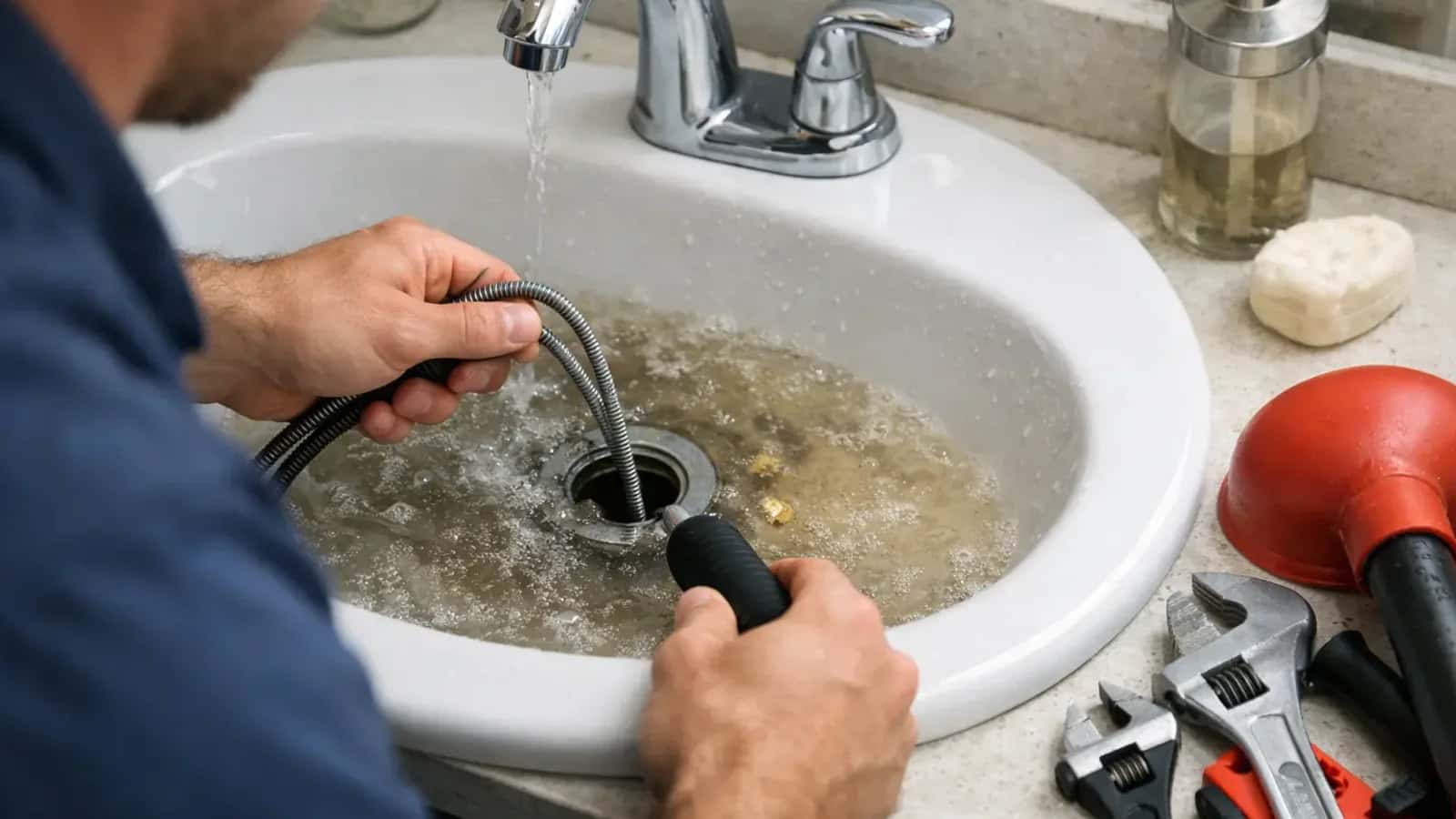
A plunger can help a soft obstruction close to a single sink or toilet when there is no wastewater exposure and no chemical cleaner in the fixture. Use steady pressure and stop if the fixture leaks, another outlet reacts or the water rises. Remove only loose material that can be reached without dismantling pipework or entering a pit. Do not pour boiling water into pipework or force tools beyond safe access.
If the symptom returns, the drain or pipe involved needs assessment rather than more force.
What DIY cannot fix, and the risks of pushing on
Household tools cannot find roots, a collapsed or displaced pipe, a low section or a deeper sewer or stormwater restriction. Forcing a snake or repeatedly plunging can damage fittings or release contaminated water, and chemical products create an extra handling risk for anyone who opens the line. Never mix cleaners.
If 2 fixtures react together or wastewater rises at a gully, shower or floor waste, the restriction is likely further downstream than one local trap and DIY should stop.
How we find the cause before we clear it
When a household approach has not settled the problem, the drain or pipe involved and safe access point come first. A fully blocked line may need enough clearing for a camera to pass; CCTV can then record roots, build-up, a foreign object or damaged pipe where visible. Mechanical clearing or water jetting is selected to suit the pipe and obstruction.
The result determines whether clearing is enough for the recorded issue or whether a repair assessment is justified.
When to stop and call a licensed drainer
Call a licensed NSW drainer for sewage backup, several fixtures slowing together, recurring blockages or stormwater threatening the property. Those symptoms can involve a downstream line that household tools cannot safely find. The job depends on the drainage system involved, access, obstruction, pipe condition and whether clearing or CCTV is required.
Blocked Drains Sydney is owner-led by licensed plumber and drainer Scott Johnstone, with 24-hour phone contact across Sydney.
Talk to a Sydney drain specialist
If a drain is blocked now, call Scott and describe what is backing up, where the property is and whether water is still rising. For a non-urgent problem, send the details for a call back.
Request drain helpCommon questions
Are chemical drain cleaners worth trying first?
Do not mix chemical drain products or use them where wastewater is rising. Follow the product and pipe manufacturer's instructions, disclose anything already used to the drainer, and stop when the blockage involves more than one fixture or persists after a safe local check.
Why does my drain block again after I clear it myself?
A DIY clear often restores flow without removing the cause. Roots, grease, silt, a sag, or a cracked pipe let water through briefly, then reblock. A CCTV inspection shows what is really happening so the line can be cleared properly or repaired, instead of clearing the same drain over and over.
Can plunging a toilet too hard cause damage?
It can. Aggressive plunging can unseat the toilet pan or force water past a weak joint into the floor or a wall cavity. Use steady, sealed strokes on a single blocked toilet, and if it will not clear or backs up across other fixtures, stop and call a drainer.