
Rain and property protection
Stormwater trouble often appears during rain when pits overflow, downpipes back up or water sits around the driveway, yard or house.
- 01Keep clearStay away from fast-moving water and wet electrical areas.
- 02NoteTell us which pit, grate or downpipe backs up when it rains.
- 03CallCall now if water is entering the building or creating a safety risk.
Fast answer
Blocked pit, grate or stormwater pipe?
If a pit, grate or downpipe backs up during rain, the private stormwater drain may be blocked by leaves, silt, roots or damaged pipework. Start with the point that overflows, clear the connected line where possible and inspect it when the problem keeps returning.
Signs the stormwater line is restricted
- 01Pits or grates remain full after rain eases
- 02Water backs up at downpipe connections
- 03Surface water moves towards the building
- 04The same area pools during repeated rain events
Clearing stormwater
Clear the pit and connected line
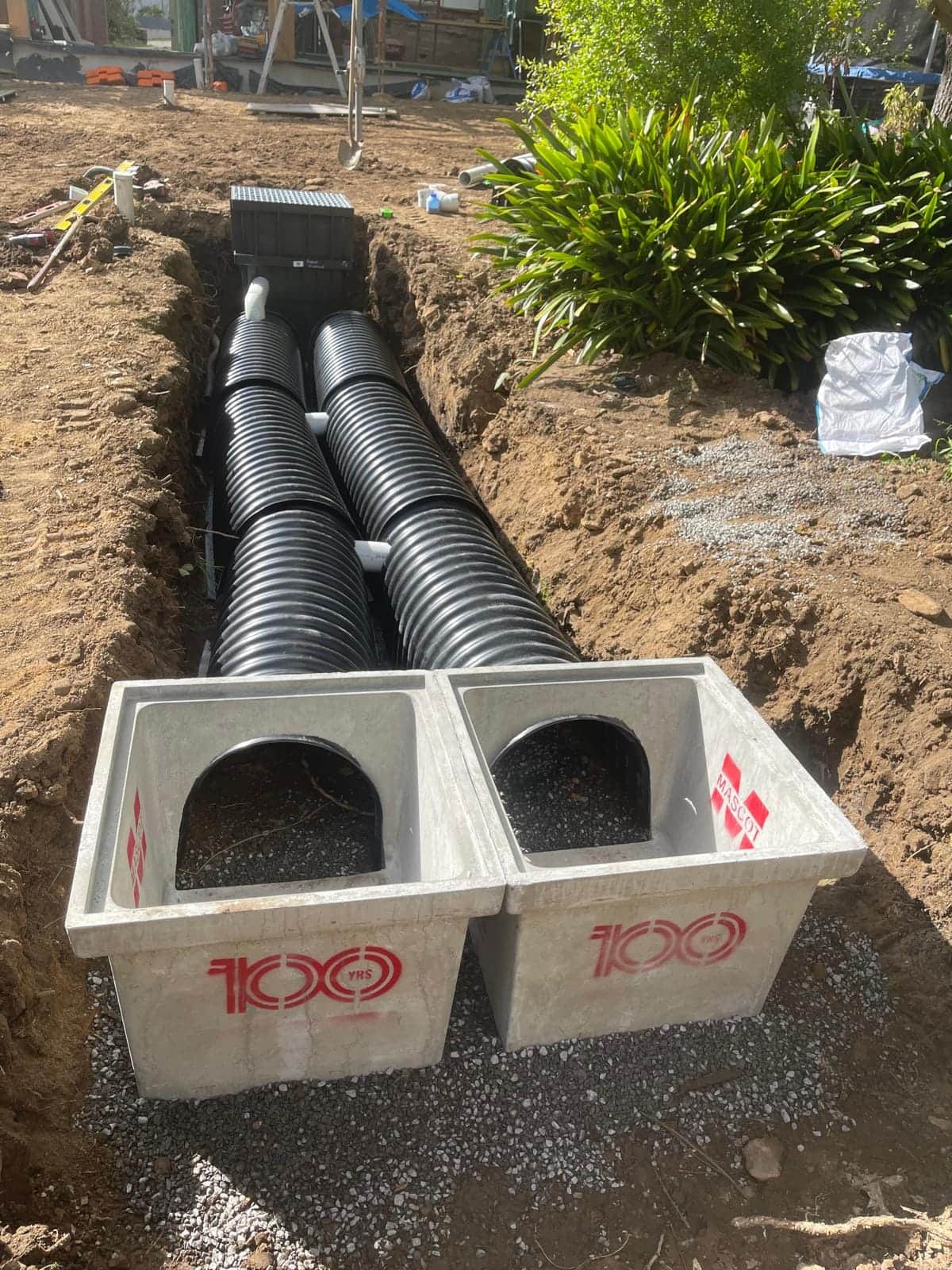
Leaves and silt can be removed from accessible pits and grates. The connected pipe may then need jetting, with CCTV used when flow stays poor or the same area floods again.
How we clear the blockage
- 01
- Pit and inlet clearing
- When leaves, silt or debris restrict the collection point.
- 02
- Stormwater jetting
- When the connected pipe and access allow high-pressure flushing.
- 03
- CCTV and locating
- When the buried pipe, connection or problem location is unclear.
Completed work
Related drain projects
See the problem, what was found, the work completed and the result from real Sydney drain jobs.
What happens
Check the stormwater drain, clear the blockage and test the flow
Stormwater pits and lines are cleared and flushed, then checked for roots, low sections or crushed pipe when the problem keeps returning.
- 01
Check
Inspect pits, grates, downpipe connections, and discharge points.
- 02
Clear
Remove surface debris and clear accessible pits.
- 03
Test
Clear the connected line where access and pipe condition allow, then test how water moves.
- 04
Explain
Explain whether damage, drainage capacity or a public drain needs further attention.
Before you book
Stormwater Drains questions
Straight answers about when this service helps, what is involved and what happens next.
View all drain questionsWhy does my stormwater drain only block when it rains?
Heavy rain exposes partial restrictions. Leaf litter, silt, roots, or a low section can pass light water but fail once the system is under load.
Can stormwater drains be inspected with CCTV?
Yes. CCTV is useful when flooding keeps returning or when the line may be crushed, full of roots, or disconnected underground.
How do you tell a blockage from a stormwater capacity problem?
A blocked pit or pipe may stay slow after rain eases. Water that appears only during very heavy rain can also involve surface flow or more water than the system can carry, so the pits and pipes need checking.
Who handles a blocked stormwater drain?
Property owners generally arrange work on private stormwater drains, while councils manage relevant public drains. The next call depends on where the blockage is found.
What should I note before calling about stormwater flooding?
Record which pit, grate or downpipe connection fills first, whether water enters the building, how it changes after rain eases and any safe access points you can see.
Helpful reading
Drain guides worth a look
- 5 June 2026 · 3 min readBlocked Stormwater Drains After Heavy RainStormwater systems often look fine in dry weather, then fail the moment heavy Sydney rain puts the line under real load.Read guide
- 10 July 2026 · 3 min readSewer vs Stormwater: Who Needs to Arrange the Work?Tell a sewer blockage from a stormwater problem, then work out whether the property owner, strata, council or Sydney Water may need to arrange the work.Read guide
 5 June 2026 · 3 min readBlocked Drain Cost Sydney: Price GuideThe access, blockage, pipe condition and what the job involves can all change a blocked drain quote in Sydney.Read guide
Sydney service areas
Blocked drain help across Sydney
Choose your part of Sydney, or call with your suburb and tell Scott what the drain is doing.
All locationsBlocked drain help
Get help with the blockage
Call if the drain is overflowing or backing up, or send your suburb, symptoms and access details.
Call 0472 753 487Add photos if they help show the drain, overflow or access point.
Request help
Send the drain details
Send your suburb, which drains are backing up and any useful access details. Scott will come back to you with the next step.