
In this guide
Fast answer
The short answer
Tree roots find their way into sewer drains through cracks, loose joints and ageing pipe sections, drawn by the moisture and nutrients inside. Once in, they trap paper and grease until the line backs up. Clearing restores flow, but a CCTV inspection is needed to find the entry point and decide whether the pipe needs relining or excavation.
How Tree Roots Get Into Sewer Pipes
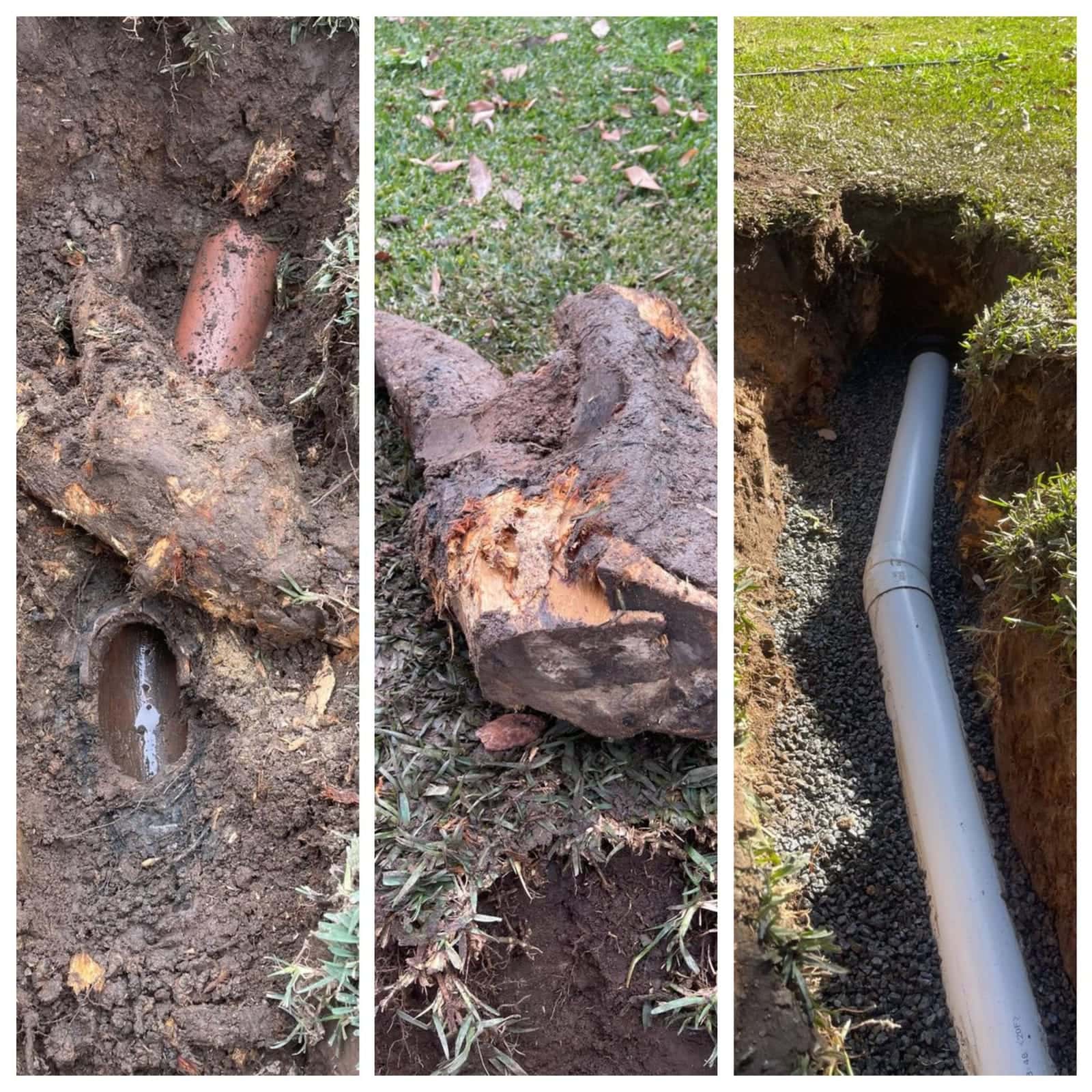
Sydney Water advises that roots can enter small cracks in wastewater pipes in search of moisture and nutrients. Cracks, open joints and displaced older pipe sections can provide an entry point; once inside, roots can slow drainage and collect other material. The species and distance alone do not prove the cause, so the pipe route and problem should be checked before any tree or repair decision is made.
Warning Signs To Watch For
Root intrusion can develop gradually. Slow drainage, gurgling, several fixtures reacting together and wastewater rising at an outside gully are warning signs of a restriction further along the line, but they do not identify roots by themselves. If the same sewer blocks again, CCTV after enough flow is restored can show whether roots, build-up or damaged pipework are involved.
How Scott finds the root entry point
Clearing restores flow but does not identify or seal a root entry point. Where access permits, the line can be cleared enough for CCTV to record the section with the problem and surrounding pipe condition. Jetting or mechanical clearing is selected to suit the pipe and obstruction, then footage can support the repair decision.
The confirmed work depends on access, line length, the clearing equipment and the inspection deliverables required.
Your Repair Options
Clearing restores flow but does not repair an open root entry point. Where CCTV records a local defect that can be repaired and the host pipe can support it, no-dig relining may create a continuous internal repair through the section with the problem. Relining is quoted after inspection because length, diameter, access and host-pipe condition matter.
a section that is collapsed, badly displaced or unable to support the proposed repair may instead need targeted excavation and replacement. The recommendation should follow the recorded defect and state the limits of each option rather than assuming every root blockage needs structural work.
Talk to a Sydney drain specialist
If a drain is blocked now, call Scott and describe what is backing up, where the property is and whether water is still rising. For a non-urgent problem, send the details for a call back.
Request drain helpCommon questions
Will tree roots come back after clearing?
Roots can return where an entry point remains open. Clearing restores flow but does not repair a cracked or displaced joint. CCTV can record the section with the problem so an appropriate local repair, relining assessment or maintenance approach can be considered.
Do I have to remove the tree to fix the drain?
Not automatically. The pipe route, defect, root entry and tree condition should be assessed before a tree decision is made. An appropriate pipe repair may address the recorded entry point, while tree work should follow arborist or council advice where required.
Is hydro jetting better than an electric eel for roots?
It depends on the pipe, access and root mass. An appropriate jetting setup can cut and flush material from the pipe wall, while a mechanical machine can open or cut through a local obstruction. CCTV after clearing can check the accessible section and show whether a damaged entry point remains.