In this guide
Fast answer
The short answer
Drain relining may suit a cracked, leaking or root-affected pipe that retains enough shape and access for a liner, particularly where excavation would disturb finished areas. It does not suit every collapsed, badly misaligned or simply blocked line. A CCTV inspection should come before a relining quote.
What relining actually fixes (and what it can't)
Relining installs a resin liner inside a measured host-pipe section and cures it to form a new internal wall. It may suit some cracked, leaking or root-affected sections where the existing pipe retains enough shape and access for preparation and installation. A fully collapsed pipe, severe loss of alignment or another unsuitable host condition may require a different repair.
a blockage alone does not show that relining is needed, which is why the line is cleared and inspected before a repair plan is recommended.
When digging is still the honest answer
Excavation can be the appropriate option for a collapsed, badly displaced or another pipe that cannot support a liner. A drainage fall problem also needs to be assessed separately because a liner does not automatically correct the pipe route or gradient. A short, accessible replacement may be more practical than relining in some properties.
Relining is one repair approach, not a default; CCTV, locating, access and the reinstatement job should be compared before the option is selected.
Why the CCTV inspection comes first
Relining cannot be planned reliably from the surface. A CCTV drain inspection can record the problem, pipe material and accessible repair section, and cleaning may be required first when material prevents useful footage or preparation. The inspection and cleaning work depends on access, camera travel, pipe condition and the equipment required.
The repair quote should then reflect the measured length, diameter, access, preparation and recorded damage. For a repeat blockage, the inspection helps establish whether relining addresses the recorded defect or whether a different next step is needed.
Roots, recurring blockages, and the long game
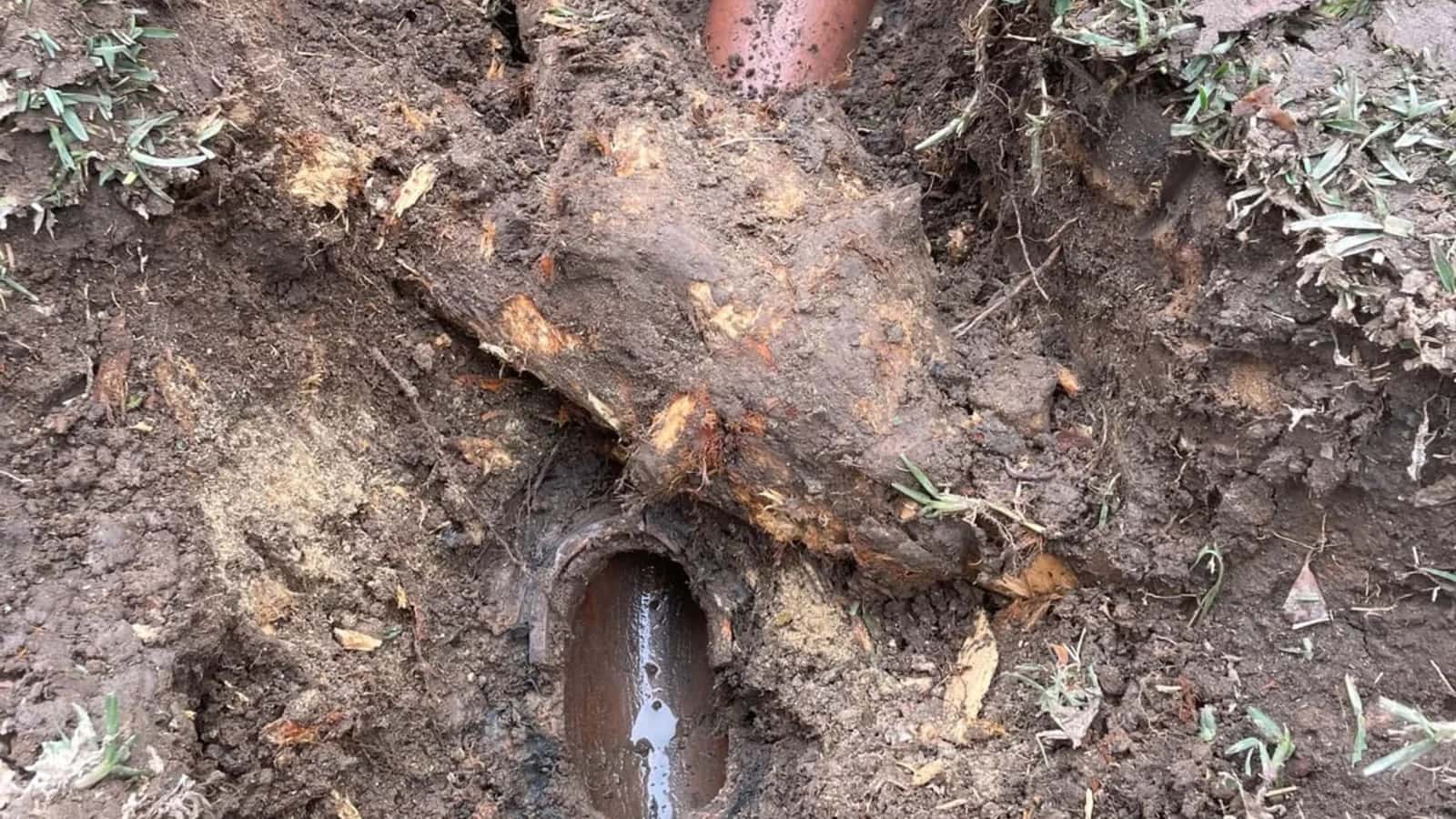
Root entry through a cracked or open joint is a reason to compare relining with excavation. Clearing can restore flow while leaving the entry point open. A liner may close an appropriate localised defect, but only where the host pipe and access support the approach. Repeat blockages, gurgling or slow drainage are reasons to inspect rather than assume relining is required.
Separating the clearing work from a measured repair plan helps the customer decide from inspection findings rather than from a promise about future blockages.
Talk to a Sydney drain specialist
If a drain is blocked now, call Scott and describe what is backing up, where the property is and whether water is still rising. For a non-urgent problem, send the details for a call back.
Request drain helpCommon questions
Is drain relining cheaper than digging?
It can be where excavation and reinstatement would be extensive, but a short, shallow and accessible replacement may cost less. CCTV, repair length, access and reinstatement should be compared before either option is priced.
Can relining stop tree roots coming back?
A liner may close a cracked joint or localised entry point when the existing pipe can support it. CCTV must first confirm the section with the problem, host-pipe condition and access; other defects or unlined sections can still need separate attention.
Do I need a camera inspection before relining?
Yes. CCTV is needed to assess the host pipe, locate the problem and measure the potential repair section. What it includes depends on access, camera travel and the required inspection findings. A flat relining price offered before that assessment may not reflect the actual preparation or repair length.