
In this guide
Fast answer
The short answer
If toilets, floor wastes or the outside overflow gully react when you use water, the problem is more likely to be in the sewer. If pits, grates or downpipes fill during rain, start with stormwater. Private drains are generally arranged by the property owner, while strata, Sydney Water or council may need to act when the blockage sits in pipework they manage.
Start with when and where the water appears
Sewer and stormwater are separate systems. Your sewer carries used water from toilets, sinks, showers and laundries towards the Sydney Water wastewater network. Stormwater carries rain from roofs and hard surfaces through downpipes, grates and pits. If indoor fixtures react when water is used, start with the sewer. If the problem appears outside during rain, start with stormwater.
Some strata and older properties have more complicated pipework, so the blockage location still needs to be checked before deciding who arranges the work.
Signs the sewer may be blocked
A sewer blockage often makes more than one fixture react. A toilet may rise and drain slowly, a shower or floor waste may gurgle when another fixture empties, or wastewater may appear at the outside overflow gully. Tree roots, wipes, sanitary products, fats, foreign objects or damaged pipework can all cause these symptoms. If wastewater is exposed, stop using the fixtures that make it rise, keep people and pets clear and call.
Signs stormwater is not draining properly
Stormwater problems usually appear outside during rain. A driveway or lawn may pool, surface pits may stay full or downpipes may back up. Leaves and silt can block pits and grates, while roots or damaged pipework can restrict the buried line. Heavy rain can also overwhelm a system that is otherwise clear, so flooding during one storm does not automatically mean a pipe is blocked.
Treat water entering a building or approaching electricity as urgent, and clear only loose surface debris that is safe to reach.
Who may need to arrange the work
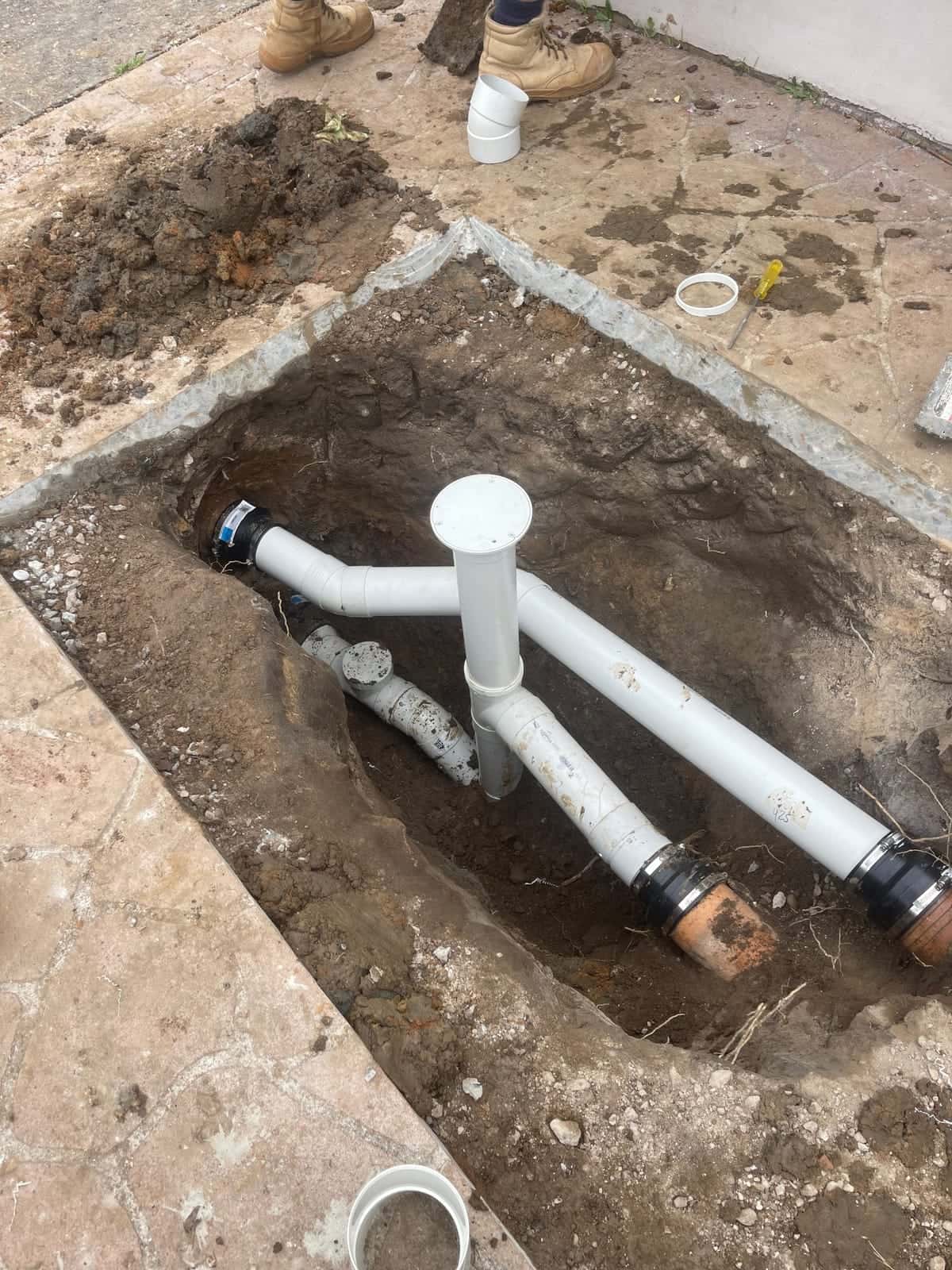
The property owner generally arranges clearing and repair of private sewer and stormwater drains. Sydney Water looks after the wastewater pipes in its network, while councils manage their public stormwater assets. Private pits, downpipes, shared private lines and property connections can still belong to the owner even when pipework runs near public land.
In strata, a branch serving one lot may be treated differently from a shared stack or drain. When it is unclear, CCTV and locating can help show where the blockage sits before the owner, strata manager, council or Sydney Water decides the next step.
How a plumber works out what is blocked
Start with which fixtures or outdoor drains react and when the problem appears. The line may need clearing before a camera can travel. CCTV can then show roots, build-up, failed joints or a collapsed section inside the accessible pipe. Scott Johnstone is licensed in NSW, licence 123739C, and can be contacted by phone at any time about a blocked drain across Sydney.
If CCTV is included in the work, Scott explains what the footage shows and what is worth doing next.
Talk to a Sydney drain specialist
If a drain is blocked now, call Scott and describe what is backing up, where the property is and whether water is still rising. For a non-urgent problem, send the details for a call back.
Request drain helpCommon questions
Which blockage is more urgent — sewer or stormwater?
Urgency depends on the risk. Keep people and pets away from an active wastewater overflow and stop connected water use where safe. Treat stormwater as urgent when it is entering a building, rising quickly or approaching electrical equipment, and contact the NSW SES for flood emergency assistance.
Can a single blockage affect both my sewer and stormwater?
Sewer and stormwater should be separate systems, so symptoms in both should be checked separately rather than blamed on one blockage. Note when the problem appears, which fixtures react and which pits or grates fill.
Why does my drain only block when it rains?
A problem that appears only during rain usually points first to stormwater collection or capacity, especially if toilets and indoor drains work normally in dry weather. The pits, private line and discharge point still need to be checked before assuming a blockage.
Who pays for a blocked sewer or stormwater drain?
The property owner generally pays for work on private drains. Sydney Water handles problems in its wastewater network, and the local council handles its public stormwater assets. In strata, the lot owner or owners corporation may need to arrange the work depending on the pipe and the registered strata plan. Find where the blockage sits before assuming who pays.